


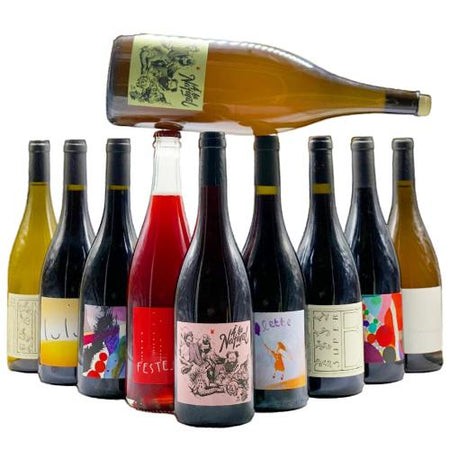




What is Natural Wine?
Table of content What is the difference between conventional wine and natural wine? What are some examples of ...
Read more
Vincent Couche began on his own account in 1996, based at Buxeuil in the Aube, in the Côte des Bar. He is one of the growers who pushed chemical-free farming in that part of Champagne well before it was fashionable, having stopped using chemicals in 1998.
The holding is 15 hectares, and the interesting thing is that it sits on two soils rather than one. At Buxeuil there are 12 hectares, mostly Pinot Noir, on Kimmeridgian clay and limestone marl with marine fossils still in it. That is the same band that runs south into Chablis, and it is why Côte des Bar Pinot Noir tastes the way it does.
The other 3 hectares are at Montgueux, about an hour north, planted to Chardonnay on south-facing Turonian chalk. Montgueux is a single hill on its own, nowhere near the Côte des Blancs, and the chalk there gives a Chardonnay with more weight and less austerity than the famous villages.
Planting at Buxeuil runs to around 10,100 vines per hectare, which is dense even by Champagne standards and means every vine carries less fruit.

Shop a huge range of 1200+ natural wines - with free shipping options too!
Trust us. We've delivered 30.000+ orders to natural wine lovers! All orders are insured delivery.
Watch producer documentaries, interviews & top wine recommendations on our social channels.
Want advice? We love to help! Get in touch for personalised wine recommendations.
They give you crap wines that are often their stock not selling and have nothing to do with your wine style. We're gonna change that.
We've created a club with three tiers, that is actually curated and ideal for the type of wine drinker your are.
At Buxeuil in the Aube, in the Côte des Bar at the southern end of Champagne. He farms 15 hectares in total, 12 of them at Buxeuil on Kimmeridgian clay and limestone marl, and 3 at Montgueux on south-facing chalk.
The Élégance Brut Nature we stock is made with no sulphur added at any stage, and the same is true of his Chloé. Other cuvées in the range are not sold on that basis and will carry a small amount at bottling, as is normal in Champagne. Small amounts of sulphites form naturally in any wine during fermentation.
73 percent Pinot Noir to 27 percent Chardonnay, with around 30 percent reserve wine aged in oak. It spends two years on its lees and is disgorged at zero dosage, so no sugar is added at the end. 12.5% alcohol.
That no sugar is added at disgorgement. Most Champagne gets a dosage of sugar to round it off after the lees are removed; a Brut Nature gets none, so the wine has to be ripe enough and well enough made to stand up without it.
Without chemicals since 1998. Treatments are herbal preparations he makes himself from nettle, horsetail, meadowsweet, willow and thyme, with minerals alongside, and the pruning, ploughing, treating and picking are timed to the lunar calendar. Planting density at Buxeuil runs to around 10,100 vines per hectare.
Because no sulphur is added. Sulphur is what keeps a conventional Champagne pale and locked down; without it the wine oxidises a little more freely and the colour deepens. It is a sign of how the wine was made rather than a fault.
Chloé, another no-sulphur bottling, ADN Montgueux, a zero dosage Chardonnay from the Montgueux chalk, the zero dosage Rosé Désir, and Sensation, released late in magnum. There is also a ratafia and some still wines under Vin de France. We do not currently stock those.
Table of content What is the difference between conventional wine and natural wine? What are some examples of ...
Read more